
Building a College Schedule That Works for the Way You Learn
Building a College Schedule that Works for the Way You Learn
For college students with learning disabilities, creating a structured schedule tailored to your unique needs and developing a daily routine that includes set times for classes, study sessions, meals, and breaks can help improve focus. Below are some ways you can build an effective college schedule that works for the way you learn:
Class Sign Up - If you get priority registration, sign up early so you can secure your ideal class times; Avoid back-to-back lectures and leave gaps between classes; For dyslexic students, limit the number of reading- or writing-heavy classes per term and pair these classes with an elective; Consider scheduling classes with smaller class sizes taught by professors instead of graduate students where the professors know your name, are available to talk after class, and answer e-mails.
Course Load - Consider a slightly reduced or standard 12-credit course load per semester and taking advantage of taking fewer hours per term, if your accommodations allow, and still be considered full time (an important consideration for health insurance and financial aid which often require full-time enrollment); Some colleges may also allow more time to complete graduation requirements.
Use All Your Accommodations - Integrate assistive technology tools; Visit writing centers, dedicated labs, and accessible stations available in general computer labs; Fully utilize any tutoring available, and pay attention to any time limitations.
Communicate with Professors - While disclosing your diagnosis to your professors is a personal decision, it could open up new avenues of support, such as tutorials, extra office hours, previews of challenging concepts, alternative assignments, visual aids, or other supportive resources.
Create a Study Schedule - Be realistic about how much time you need and, when in doubt, you may want to over-budget study time; Block out specific study hours; Schedule difficult study blocks during your high-energy hours; Build in buffers by blocking out time for unexpected delays or longer preparation tasks before major deadlines; Incorporate frequent short breaks, like studying for 25 minutes followed by a 5-minute break; Create a distraction-free dedicated study space by using noise-canceling headphones, keeping your study area organized, and limiting social media scrolling; Regularly review and adjust your study schedule because it is hard to stick to a rigid routine.
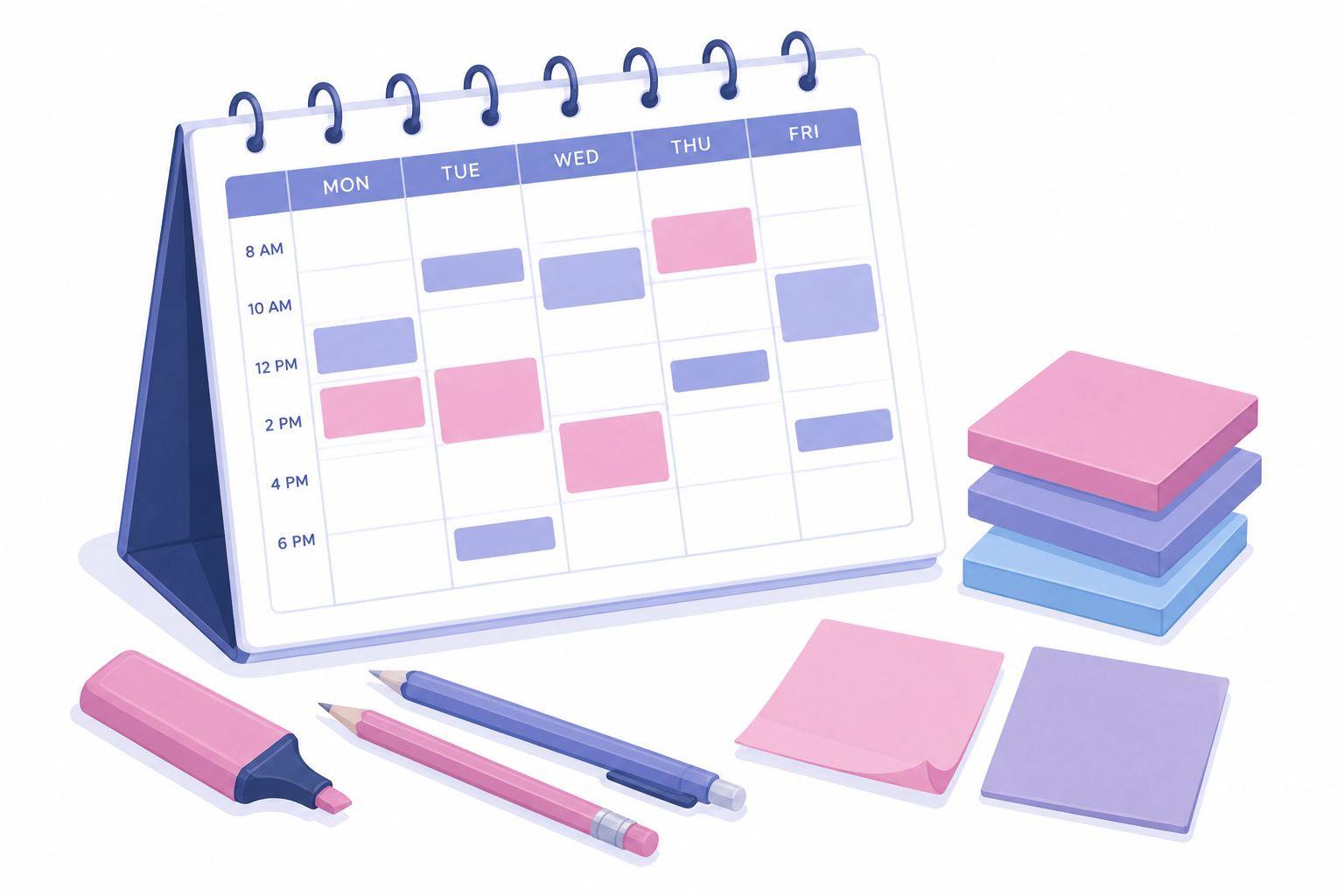
Time Management - Use visual aids, such as calendars, planners, or scheduling apps, and consider color-coding different activities and, at the beginning of the semester, add major deadlines from each class syllabus; Use reminders and alarms to prompt you to start or switch tasks to help you stay on track; Try to keep to a routine sleep and meal schedule and work in physical activity.
Prioritization - Break down assignments into smaller, manageable chunks because large tasks can often be overwhelming, leading to procrastination; Prioritize assignments by starting with what is due first or prioritize based on how much time and energy a task may take by scheduling high-energy tasks for the beginning of a study session.
Support Systems – Utilize college peer mentoring or social support programs; Don’t forget to build support outside of academic work with a strong network of friends, family, and medical professionals; Make time for your family and friends and speak openly with them about any struggles you're having; Given school privacy policies that prevent parents from accessing your information, having a school contact in case there are any concerns during the academic year can be helpful.
For students with a learning disability, being patient and kind to yourself will maximize productivity in the long run. Always remember to celebrate accomplishments no matter how small, take breaks, and rest, but don’t stop moving forward.
Sources
"Transitioning from High School to College: Help for Students with Learning Disabilities." International Dyslexia Association, 2020.
Delohery, Caitlin. "College Guide for Students with Dyslexia." Study.com, 2026.
Jennings, Halsey. “From Support to Independence: Helping You Take the Lead on Your Education.” The Schenck School, 2026.
